
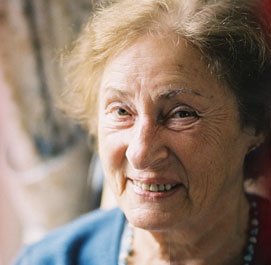
Aegis takes survivors to world capitals with Oxfam in a successful campaign for adoption of commitment to the "Responsibility to Protect".
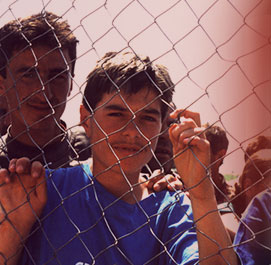
Aegis successfully generates international pressure for withdrawal of Ethiopian troops sent into Sudan towards the Anuak refugee camp.
Aegis Students, Aegis' youth arm, is launched. The first Aegis Students society is established at Oxford University.
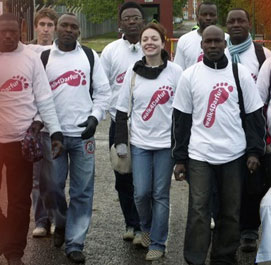
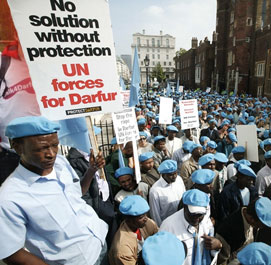
First global 'Day for Darfur'. Aegis is involved in organisation for rallies in dozens of cities worldwide, calling for UN peacekeepers.

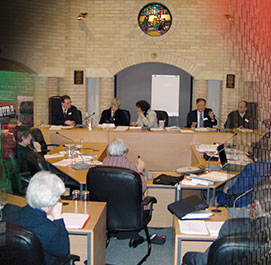
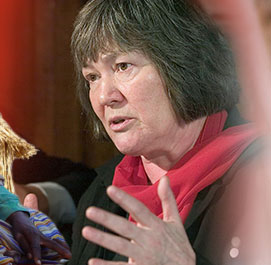
Launch of UK’s All Party Parliamentary Group for Genocide Prevention, coordinated by Aegis. Former International Development Secretary Clare Short MP becomes first Chair.
Aegis takes Holocaust and genocide survivors to world capitals with Oxfam in a successful campaign for adoption of commitment to the “Responsibility to Protect” at the UN World Summit in New York.
Aegis successfully generates international pressure for withdrawal of Ethiopian troops sent into Sudan towards the Anuak refugee camp at Pochalla. The story never breaks in the media.
Aegis Students, Aegis’ youth arm, is launched. The first Aegis Students society is established at Oxford University.
First global ‘Day for Darfur’. Aegis is involved in organisation for rallies in dozens of cities worldwide, calling for UN peacekeepers.
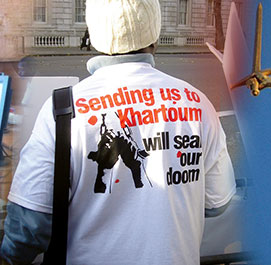
Aegis rescues a Darfuri asylum seeker from Khartoum after he is sent back to Sudan from the UK and tortured.
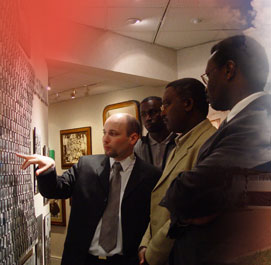
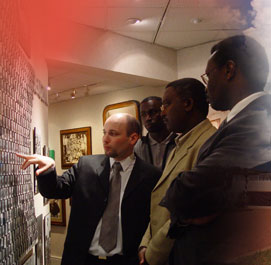
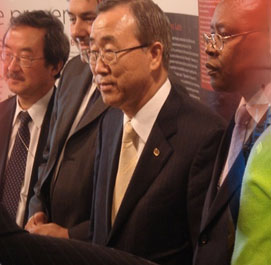
UN Secretary General Ban Ki Moon opens a joint Aegis-UN exhibition at the UN headquarters in New York. Titled ‘Lessons from Rwanda’, it goes on tour in the Americas, Africa and India.
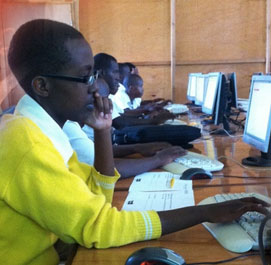
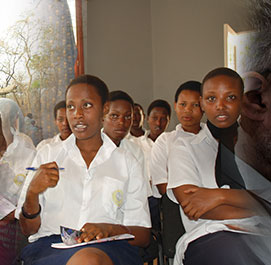
A peace-building education programme is initiated by Aegis at the Kigali Genocide Memorial, providing structured learning for visiting school pupils.
Evidence of torture, secured by Aegis during an undercover investigation in Khartoum, helps to end the removal of Darfuri asylum seekers from the UK to Sudan.
Aegis secures changes to UK law on genocide, war crimes and crimes against humanity, ending impunity of genocide suspects in UK.
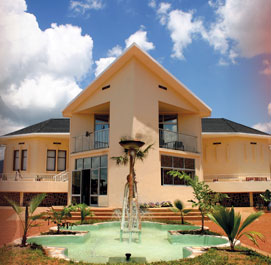
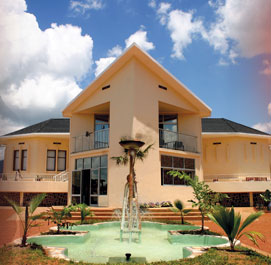
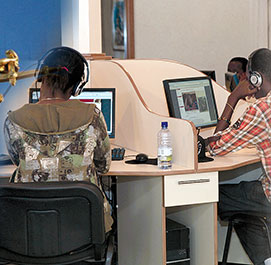
Aegis opens the Genocide Archive of Rwanda in partnership with the National Commission for the Fight Against Genocide (CNLG).
Aegis opens the Discover Rwanda Youth Hostel in Kigali and charity shops in the UK as social enterprises to support its mission.
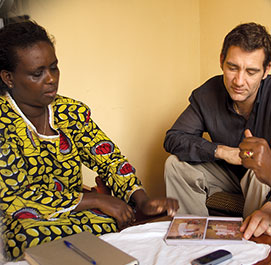
Actor Clive Owen becomes Aegis’ Goodwill Ambassador.
Aegis publishes a widely cited economic report, ‘The Cost of Future Conflict in Sudan’, estimating renewed war could cost over US$100bn across a decade.
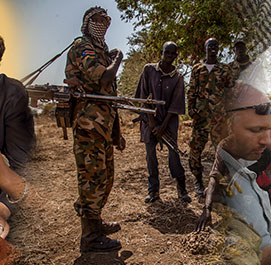
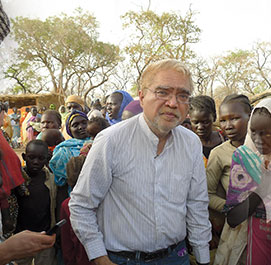
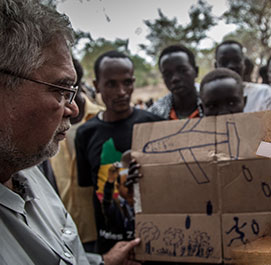
Former UN Sudan chief Dr Mukesh Kapila becomes Aegis’ Special Representative on Crimes Against Humanity and visits the Nuba Mountains, Sudan, with Aegis CEO Dr James Smith. They record first evidence of illegal cluster munitions and antipersonnel mines being used by Government of Sudan against civilians in the region.
Independent report on Aegis’ peace-building education programme in Rwanda shows that it is changing attitudes and behaviour, not only among participating students but within the communities from which they come.
Aegis Special Representative Mukesh Kapila revisits Sudan’s Nuba Mountains, Blue Nile State, and Darfur frontier. Launches memoir – ‘Against a Tide of Evil’.